TBC Center Home

Category

Industry Trends

5 articles

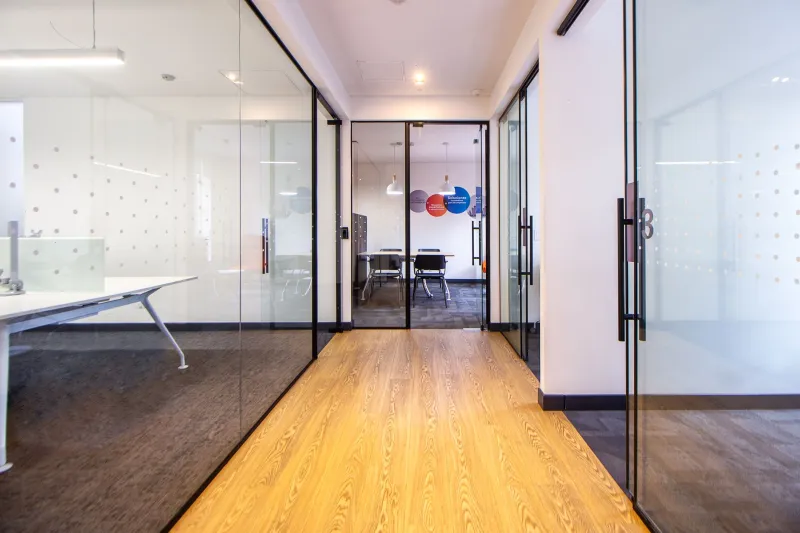
The Architecture of Opportunity: How a Room's Physical Design Either Unlocks or Blocks High-Value Business Encounters

The Architecture of Opportunity: How a Room's Physical Design Either Unlocks or Blocks High-Value Business Encounters

The layout of a conference venue is rarely discussed as a business variable, yet spatial design exerts a measurable influence on the quality and frequency of professional connections formed within it. Drawing on insights from venue architects, event planners, and behavioral researchers, this analysis examines the design principles that separate spaces where deals happen from spaces where people simply pass through.


Second-Tier Cities, First-Rate Connections: The Rise of Regional Business Hubs in American Corporate Culture

Second-Tier Cities, First-Rate Connections: The Rise of Regional Business Hubs in American Corporate Culture

Corporate event budgets are being reshaped by rising travel costs, sustainability commitments, and a growing recognition that proximity to a major airport does not guarantee a productive conference. Across America, mid-size cities are capturing a larger share of professional gatherings—and the companies attending regional events are reporting business outcomes that rival, and in some cases exceed, those generated by flagship conventions in gateway cities.

The Off-Map Advantage: Why Executives Are Closing More Deals in Secondary Cities Than in New York or Chicago

The Off-Map Advantage: Why Executives Are Closing More Deals in Secondary Cities Than in New York or Chicago

A quiet but significant shift is underway in how America's most deal-driven companies select venues for high-stakes meetings. Rather than defaulting to major metropolitan centers, a growing number of corporate event planners and C-suite leaders are deliberately choosing secondary and tertiary markets—and reporting measurably better outcomes. The reasoning is counterintuitive, but the results are difficult to argue with.

The Trust Gap: Why Remote-First Companies Are Returning to Physical Business Spaces to Close Deals and Retain Talent

The Trust Gap: Why Remote-First Companies Are Returning to Physical Business Spaces to Close Deals and Retain Talent

The promise of a fully remote business model was efficiency without compromise. What many American companies discovered instead was a measurable deficit in the trust, deal velocity, and relational depth that in-person business interactions uniquely produce. The data now building around hybrid meeting models suggests that dedicated business spaces are not a relic of pre-pandemic corporate culture — they are a strategic necessity.

The Return to the Room: Why Distributed Companies Are Booking More Conference Space Than Ever

The Return to the Room: Why Distributed Companies Are Booking More Conference Space Than Ever

In what may be one of the more counterintuitive developments in contemporary corporate real estate, companies built entirely around distributed work are emerging as among the most consistent users of professional conference and event facilities. The reasons illuminate something fundamental about what physical gathering space is actually for — and how its role is being redefined for a workforce that no longer defaults to the office.